In too many schools, character education lives on a laminated poster in a hallway. Words like respect, kindness, or integrity sit in static bold print above a dictionary definition, largely ignored by passing students. We expect children to internalize noble virtues simply because a slogan hangs on a bulletin board. But virtue is not a poster. It is a habit, cultivated through daily practice, shared inquiry, and an intentional community.
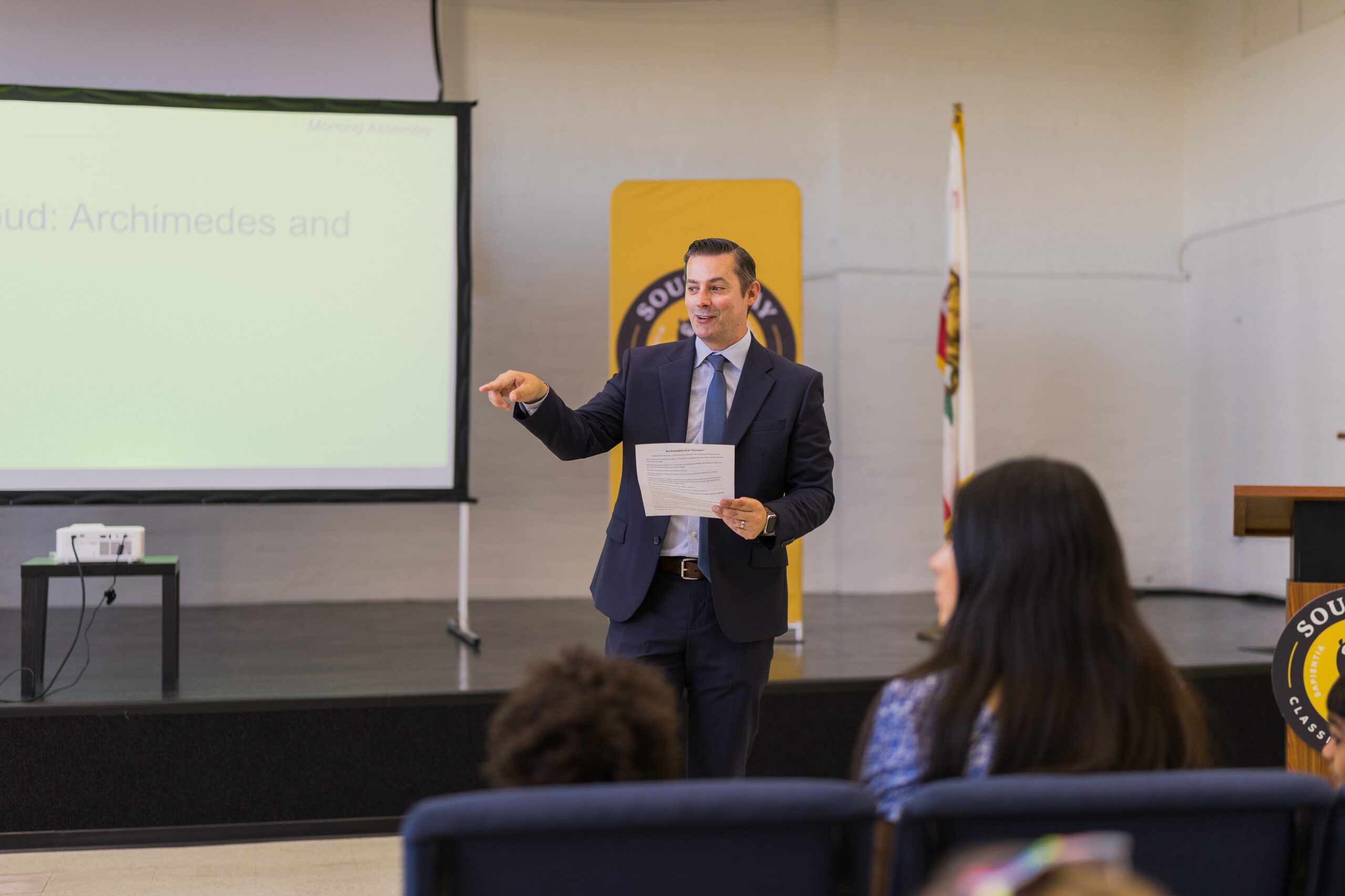
At South Bay Classical, we believe culture must precede curriculum. Long before a child masters phonics or analyzes a historical text, they absorb the moral climate, daily rhythms, and social expectations of the room they inhabit. That is why every morning at 8:00 AM, before a single textbook opens, our entire school gathers as one body.
In these fifteen minutes, we set the intellectual and moral cadence for the day. We begin with a Word of the Day, concepts like patience, adaptability, or resilience. Rather than handing down a canned definition, we ask our students what they think the word means first, encouraging them to wrestle out loud and sit comfortably in that uncertainty before we build on what they offer.
From there, our Head of School, David Jackson, presents a daily mathematical puzzle, identifying a subtle pattern hidden within a unique number set that demands the very focus and patience we just named. The assembly closes with a short read-aloud that anchors the morning’s virtue in a narrative a six-year-old and an eighth-grader can both hold onto. In one quarter-hour, our students move seamlessly between moral reflection, mathematical reasoning, and literary imagination.
What makes this gathering truly distinctive is that the circle extends beyond our students. Parents who linger after drop-off often stay a few extra minutes to watch. What they see isn’t a staged performance for visitors, but an unfiltered window into how our school actually thinks: children raising hands to test a guess at a math pattern, or venturing their own definition of a complex word. It also gives our faculty and administration a daily moment to name where our students are thriving, and to offer a gentle, collective word on what we’re still working on together, as one unified community rather than isolated classrooms operating in silos.
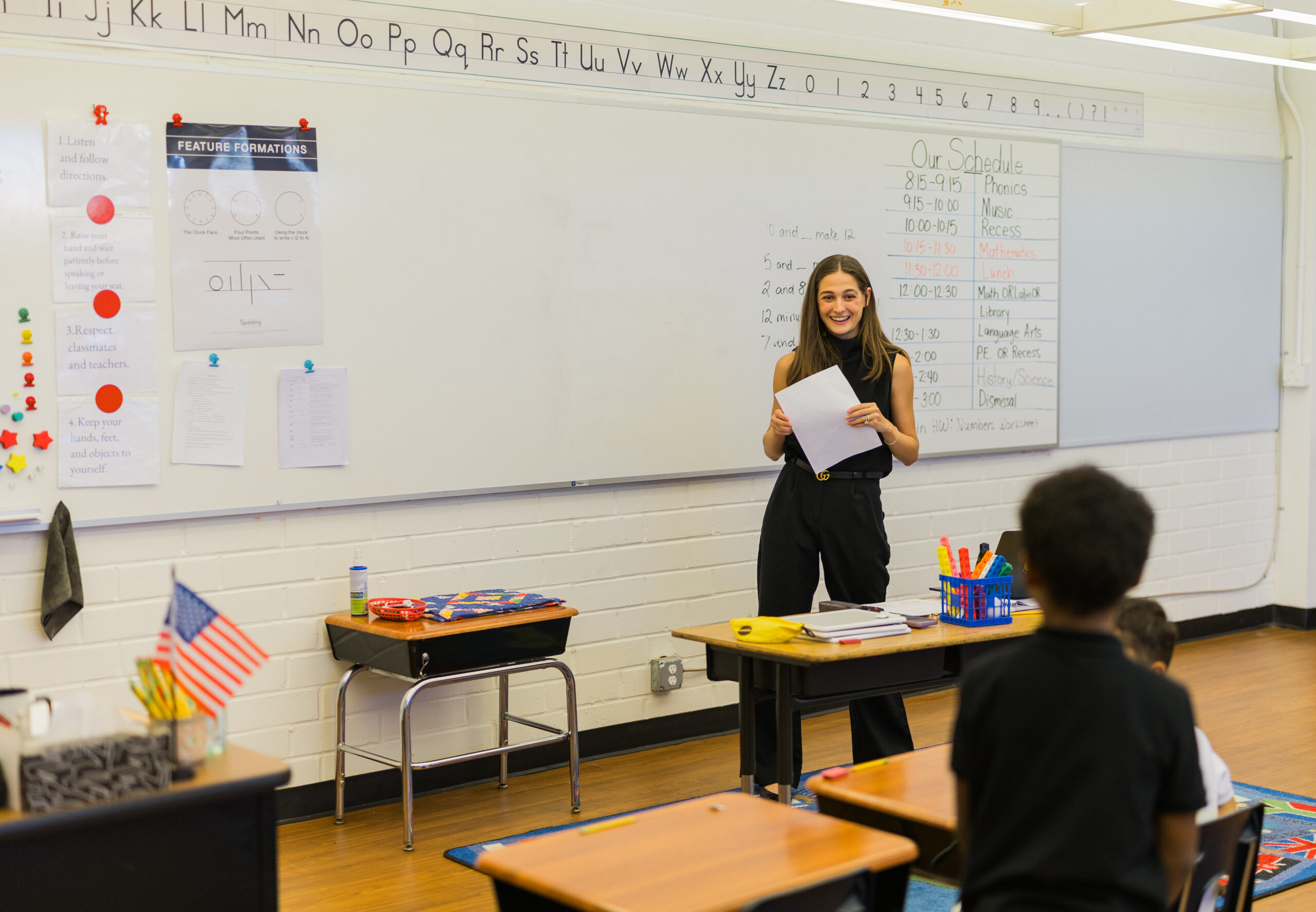
By 8:15, the assembly concludes. But a student who spent those fifteen minutes actively wrestling with what perseverance looks like walks into their classroom differently than one who didn’t. They have already practiced sitting with a hard question before reaching for a quick answer, which is, not incidentally, the exact posture required when they open their Latin or math texts a few hours later.
An extraordinary education does not begin with rigid compliance or detached memorization. It begins with wonder, shared community, and the quiet discipline of showing up together before the day’s work begins. By prioritizing culture every single morning, we ensure our students aren’t merely acquiring subjects. They are becoming the kind of people who will pursue truth, goodness, and beauty for a lifetime.